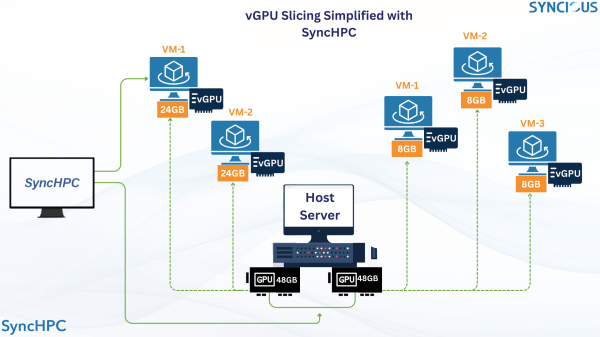
As the demand for remote visualization, computing and high-performance workloads increases, organizations are turning to virtual desktop infrastructure (VDI) and GPU virtualization to meet performance, scalability, and flexibility needs. One of the most impactful innovations in this space is NVIDIA's vGPU slicing and SyncHPC is making it easier than ever to implement. Whether you're supporting... Continue Reading →
“SyncHPC VDI & Protocols for Advanced Virtual Desktop Solutions”
IntroductionWhat is VDI ?VDI, or Virtual Desktop Infrastructure, is a technology that hosts desktop environments on a centralized server. Instead of running the operating system, applications, and files locally on a user’s device, everything is virtualized and managed from a central location. Virtual Desktop Infrastructure (VDI) has revolutionized the way organizations deliver desktop environments to... Continue Reading →
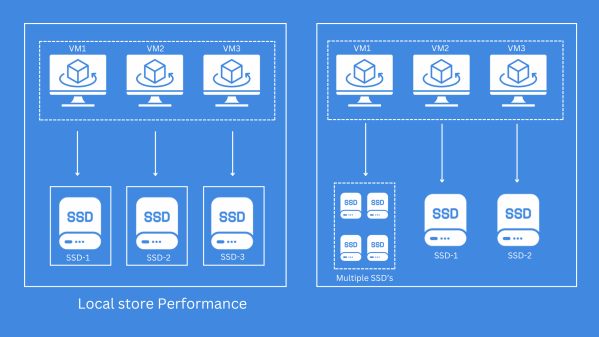
Understanding Role of “Local Storage” in HPC ?
What is Local Store? In High-Performance Computing (HPC), a local store refers to a storage mechanism that is directly accessible and optimized for the computational tasks being performed on a specific node or processor. It is designed to provide fast read and write access for frequently used data, minimizing latency and bandwidth issues associated with... Continue Reading →
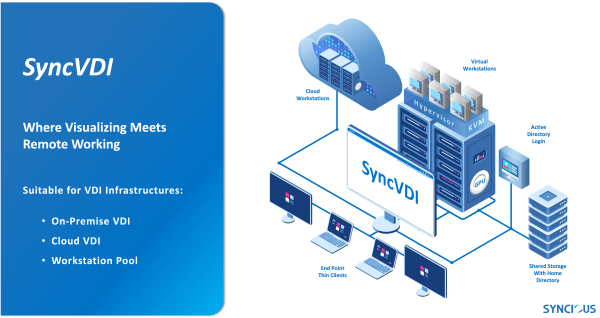
SyncVDI: The Key to Seamless Remote Visualization with Graphic Processors (GPU)
The graphic processing unit (GPU) is an essential part of workstations for running 3D applications, computer-aided design (CAD) work, machine learning projects, simulations, etc. SyncVDI is a remote-visualization platform built to achieve greater graphic performance and workstation optimization. Use Cases: 1. On-Premise Virtual Workstations: Organizations use SyncVDI along with Linux KVM hypervisor to build NVIDIA... Continue Reading →
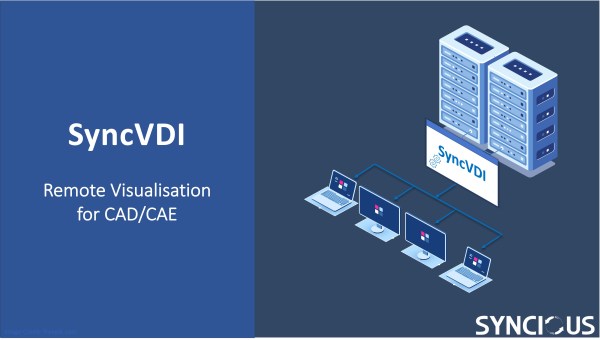
‘SyncVDI’ – Remote Visualisation for CAD/CAE Workflow
The aim of the R&D team is to perform complex computing projects using high-end workstations. Organisations spend a good amount of CAPEx and resources to maintain these high-end workstations for the users. Due to cost and maintenance challenges, there is a significant need to optimize the usage of workstations per user. Some of the challenges... Continue Reading →