Introduction As AI, ML, and HPC workloads grow, efficient GPU utilization has become critical. Traditionally, a single GPU served one workload at a time, often leaving resources underused. To solve this, NVIDIA introduced Multi-Instance GPU (MIG) technology. MIG allows a single GPU to be securely partitioned into up to seven fully isolated GPU instances for... Continue Reading →
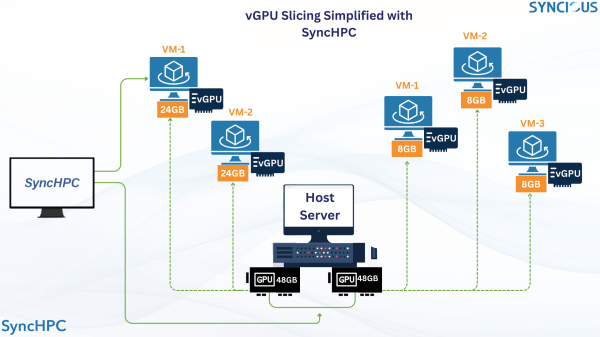
vGPU: Slicing of GPUs Simplified with SyncHPC
As the demand for remote visualization, computing and high-performance workloads increases, organizations are turning to virtual desktop infrastructure (VDI) and GPU virtualization to meet performance, scalability, and flexibility needs. One of the most impactful innovations in this space is NVIDIA's vGPU slicing and SyncHPC is making it easier than ever to implement. Whether you're supporting... Continue Reading →
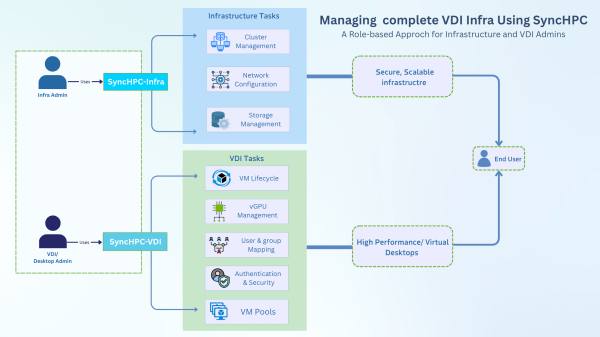
Managing Complete VDI Infra Using SyncHPC
A Role-Based Approach for Infrastructure and VDI Admins Virtual Desktop Infrastructure (VDI) is no longer just about hosting desktops in the cloud. It’s about providing a secure, high-performance, and manageable digital workspace backed by a scalable and agile infrastructure. SyncHPC offers a complete solution for VDI management by cleanly separating the responsibilities between two critical... Continue Reading →
Building a Scalable AI Lab with SyncHPC: A Real-World Deployment at an Educational Institute
Setting up an AI lab for "scalability" needs a thorough process and right tools. This blog describes the implementation of "scalable" AI solution using SyncHPC. Here’s how a leading education institute partnered with Syncious to build a high-performing and scalable AI Lab Using the SyncHPC platform empowering research students with real-world AI and machine learning... Continue Reading →
Build Private AI Development Environment using SyncHPC
Introduction In the fast-paced world of machine learning, managing model repositories efficiently is crucial for productivity, collaboration, and reproducibility. One of the key requirements for modern enterprises is to store and manage their Independent AI models and code in secure, private environments ,not just for performance, but for data ownership, regulatory compliance, and IP protection. This... Continue Reading →
Interactive AI Workflows Made Easy with SyncHPC-AI
Introduction Data scientists and ML engineers need accessibility and ease of use for their development environment. SyncHPC-AI bridges this gap by offering a seamless, browser-based interface to powerful tools like Jupyter Notebooks, VS Code via Code-Server, and Pod Terminals. This blog explores how SyncHPC-AI empowers users to interactively access these tools without the need for... Continue Reading →
Migrating VMware VMs to KVM: A Step-by-Step Guide
As organizations look to optimize virtualization costs and embrace open-source solutions, migrating from VMware to KVM becomes a strategic choice. Here's a straightforward guide to help you move your VMware virtual machines (VMs) to a KVM-based deployment using qemu-img. 🔁 Step-by-Step Migration Process 1. Clone the Running VMware VM Ensure the VM you want to... Continue Reading →
SyncHPC: Multi-Scheduler Support
High-performance computing (HPC) & Artificial Intelligence (AI) environments require robust workload management solutions to efficiently allocate resources, schedule jobs, and optimize cluster performance. Different HPC infrastructures and workloads necessitate the use of various job schedulers. SyncHPC redefines workload management by seamlessly integrating with multiple job schedulers.A multiple job scheduler is a system that manages the... Continue Reading →
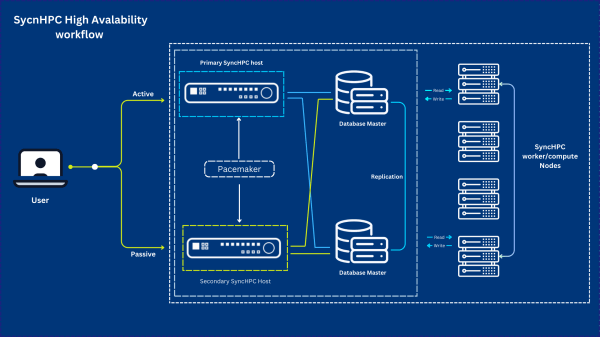
High Availability (HA)
Understanding High Availability: Ensuring Uptime and Reliability in Systems In today’s digital landscape, where businesses depend heavily on online services and applications, system downtime can be costly. For this reason, maintaining high availability (HA) has become one of the top priorities for IT teams and organizations. High availability refers to systems or services that are... Continue Reading →
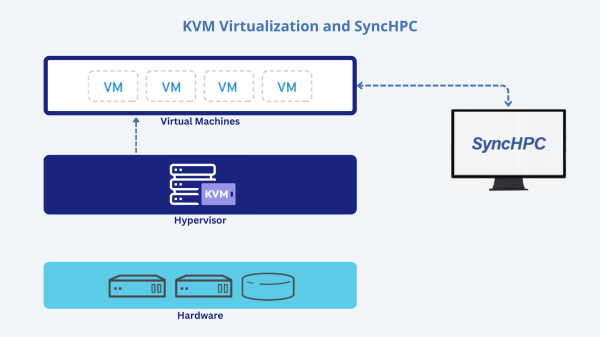
Revolutionizing On-Premise VDI Solutions with KVM Virtualization and SyncHPC
In today's dynamic workplace environment, organizations are increasingly seeking flexible and secure desktop virtualization solutions that maintain data sovereignty and control. Our enterprise-grade Virtual Desktop Infrastructure (VDI) solution named SyncHPC, powered by KVM (Kernel-based Virtual Machine) virtualization, offers a robust, cost-effective approach to on-premise virtual desktop deployment. What is KVM?Kernel-based Virtual Machine (KVM) is a... Continue Reading →
“SyncHPC VDI & Protocols for Advanced Virtual Desktop Solutions”
IntroductionWhat is VDI ?VDI, or Virtual Desktop Infrastructure, is a technology that hosts desktop environments on a centralized server. Instead of running the operating system, applications, and files locally on a user’s device, everything is virtualized and managed from a central location. Virtual Desktop Infrastructure (VDI) has revolutionized the way organizations deliver desktop environments to... Continue Reading →
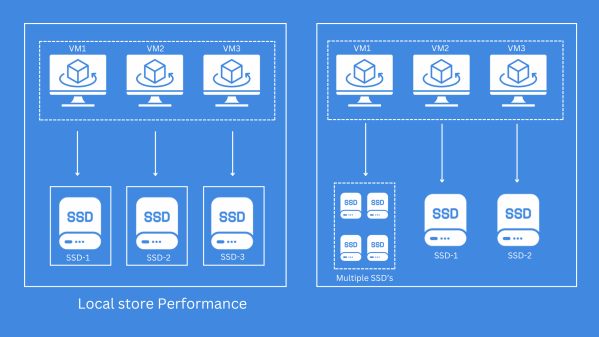
Understanding Role of “Local Storage” in HPC ?
What is Local Store? In High-Performance Computing (HPC), a local store refers to a storage mechanism that is directly accessible and optimized for the computational tasks being performed on a specific node or processor. It is designed to provide fast read and write access for frequently used data, minimizing latency and bandwidth issues associated with... Continue Reading →
Hybrid HPC at Engineering Design Company
Case Study: HPC+VDI at On-Premise and Cloud Background A leading engineering design company, committed to serve the leading organisations in automotive and aerospace space. To stay competitive and innovate efficiently, it integrated High-Performance Computing (HPC) into its operations. This case study explores how SyncHPC helped their R&D design and simulation processes. As the companies HPC... Continue Reading →
A case study : On Premise HPC Solution
Setting up a High-Performance Computing (HPC) environment on-premise involves several key considerations. Two popular types are parallel and tightly coupled workloads. This blog post discusses the tightly coupled HPC cluster case-study. Please note this blog post discusses the overview of process. For technical details, there is a documentation for administrators at https://syncious.com/documentation.html To keep a step... Continue Reading →
Leveraging Reports & Analytics for HPC ,VDI & Infra: A Modern Approach
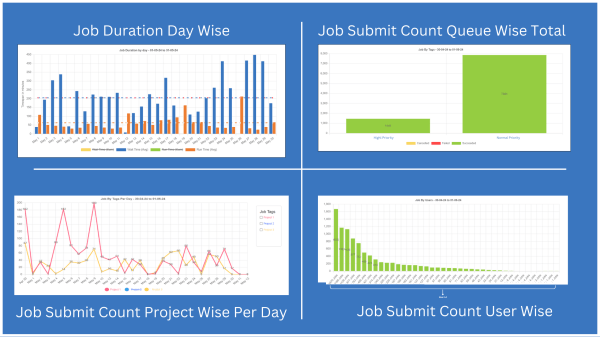
High-Performance Computing (HPC) and Virtual Desktop Infrastructure (VDI) and Sync Infrastructure (SyncInfra) are technologies that, when combined, can offer immense power and flexibility for computational tasks. However, as these systems become more integrated and sophisticated, managing and optimizing their performance can be challenging. This is where reports and analytics come into play. In this blog,... Continue Reading →
SyncOps: An Orchestration Engine of SyncHPC
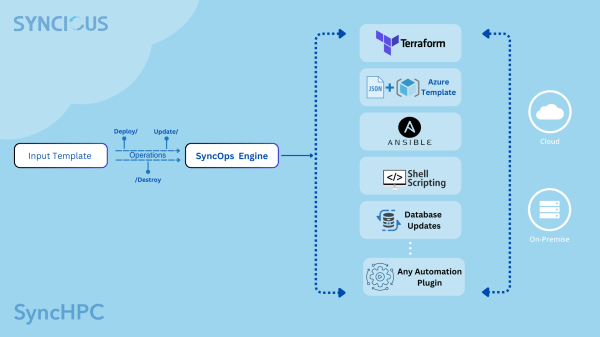
Do you know how SyncHPC works behind the scenes? For those immersed in the world of HPC / AI or VDI, understanding the inner workings of SyncHPC can unlock unlimited possibilities. SyncHPC platform is designed to deploy big compute workloads on cloud or on-premises. In this blog, we'll explain the orchestration engine of SyncHPC, exploring... Continue Reading →
Create, Manage and Access HPC on Google Cloud (GCP)
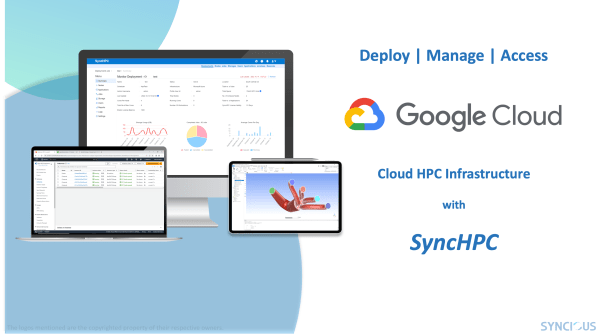
This blog explains two important functions of SyncHPC on Google Cloud Platform (GCP): 1. Deploying and managing HPC cluster, 2. Accessing HPC Cluster for data and jobs. 1. Deploy and Manage HPC Cluster on GCP https://youtu.be/_qMzbT1mlvw Effortless Google Cloud HPC Deployment: Log in: Access SyncHPC with your admin credentials. Navigate: Find the "Deployment" tab in the main... Continue Reading →
Deploy HPC Cluster on Oracle Cloud Infrastructure
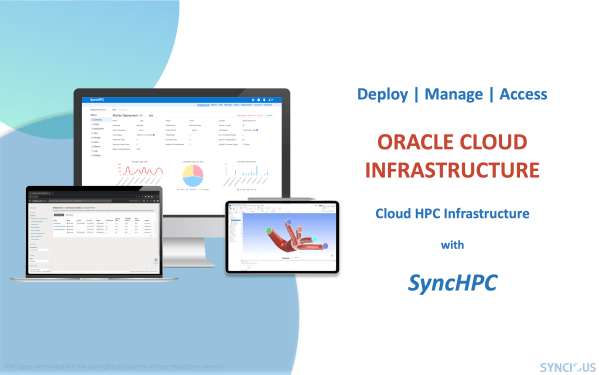
SyncHPC is a platform that allows administrators exceptional control over multiple clouds, including Oracle Cloud Infrastructure (OCI). It simplifies the process of deploying, managing, and accessing HPC clusters. In this context, let's take a closer look at SyncHPC's HPC deployment functionality on OCI. Deploying with ease SyncHPC offers a user-friendly, intuitive deployment process. Hence, it... Continue Reading →
Deploy HPC Cluster on Microsoft Azure using SyncHPC
SyncHPC is a platform that empowers administrators with unparalleled control of multiple clouds including Microsoft Azure. It helps deploy, manage, and access HPC clusters with ease. Let's explore SyncHPC's HPC deployment functionality that makes it a game-changer in this arena. https://youtu.be/nZUfct4fY2c Effortless Deployment One of the standout features of SyncHPC is its intuitive deployment process.... Continue Reading →
‘One-Platform’ for Hybrid HPC: ‘SyncHPC’
Industries like Manufacturing, Automobile, Electronic Design Automation, Weather Forecasting, AL/ML, and Oil/ Gas are performing complex computing jobs on High Performance Computing (HPC) Systems to achieve expected results in less time. To avoid tangible and intangible situations, users are considering Cloud HPC as an option. Hence, users need a 'One-Platform' to deploy, manage and access... Continue Reading →
LS-DYNA Simulations With SyncHPC
‘SyncHPC’ platform helps users to deploy, manage and utilize their Public Cloud Clusters from any Cloud Service Providers like Microsoft Azure, Oracle Cloud Infrastructure and many more. It also allows users to run multiple CAE applications with required HPC and workstation configuration from cloud. Let’s check out an example with LS-DYNA: This blog post describes... Continue Reading →
Running Ansys SPEOS on SyncHPC to utilize cloud HPC scalability
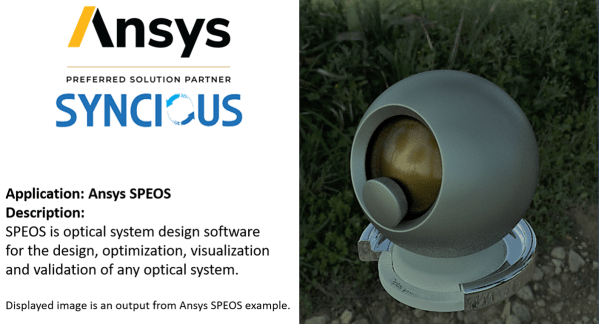
SyncHPC simplifies the lifecycle of multiple Ansys applications like ‘SPEOS’ (formerly OPTIS SPEOS) on Cloud-based high-performance computing (HPC) infrastructure. It provides easy deployment, management and usage of HPC resources for Ansys applications. This blog post describes the performance of ‘SPEOS’ on SyncHPC. It also briefly describes the end-user workflow of running ‘SPEOS’ application on this... Continue Reading →
Ansys CFX performance on SyncHPC
Standard HPC benchmark cases from Ansys CFX are selected to test performance and scalability of SyncHPC. This blog post presents the results of selected Ansys CFX cases on SyncHPC. Syncious team selected 2 cases from Ansys CFX: Airfoil-10M: Transonic flow around an airfoil. Global Mesh size: 9,933,000 nodes, 9,434,520 elements (all hexahedra) Syncious team configured... Continue Reading →
Introducing SyncAPI 1.0 : Get HPC capability instantly
Syncious is excited to announce release of SyncAPI 1.0 for users willing to add HPC capability in their applications. It allows instant connect from an application to HPC cluster. This HPC cluster can be deployed on public cloud or on-premise. SyncAPI significantly reduces time to market of HPC compatible applications. What is SyncAPI? It is... Continue Reading →
Ansys HFSS Analysis on SyncHPC
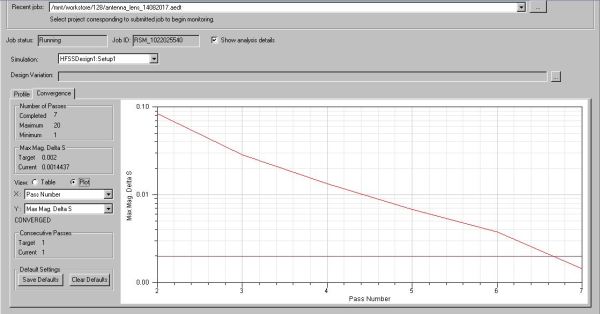
Ansys HFSS delivers 3-D full-wave accuracy for components to enable RF and high-speed design. Many times, HFSS needs High Performance Computing (HPC) infrastructure for complex problems. This blog post presents the performance of projects executed on Ansys HFSS using SyncHPC. In this experiment, team tried to design and analyze printed slotted antenna with dielectric hyperboloid lens.... Continue Reading →
Ansys Fluent, CFX on SyncHPC
Engineering teams of manufacturing industry use simulation products like Ansys Fluent. Many times such tools need HPC clusters to run simulations. Organizations try to solve two important aspects of HPC: Management of HPC clusters Simplify end-user HPC workflows. Recently, Syncious released a feature to submit Ansys Fluent and CFX jobs from SyncHPC user interface. This... Continue Reading →